Showing posts with label Newcastle United. Show all posts

Friday, March 16, 2012

My Back Pictures - 35 Leeds Road

Huddersfield Town 2v2 Newcastle United
Monday 7th May 1984
Football League Division 2


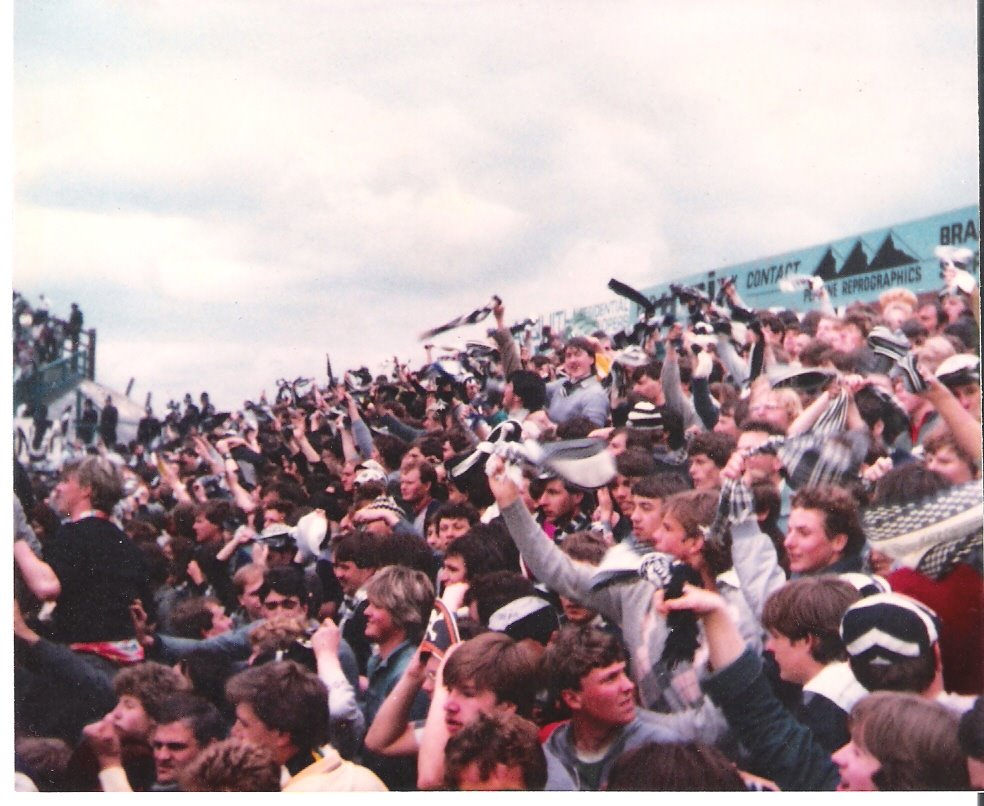
One of the first grounds to be knocked down and replaced with a swanky new stadium was Huddersfield Town’s Leeds Road in the Kirklees borough of Yorkshire. The old ground was set amongst the picturesque backdrop of Last of The Summer Wine, but on a Bank Holiday Monday in 1984 these tranquil surroundings were invaded by 12,000 Geordies arriving for a promotion party.
This particular era evokes some of my fondest memories supporting the lads away from home. On reflection it’s hard to believe that up to this point, I had been following United for only ten years, but what an eventful decade it had been. 
My first season ended with embarrassment and in floods of tears on 5th May 1974 as a United side not only lost to Liverpool at ‘It’s a Knockout’ on Grandstand but were also humiliated on FA Cup final day, and when I say humiliation I don’t just mean the purple tracksuit tops the players wore as Moncur lead the players out of the Wembley tunnel.
This was following by my first Wembley visit in ’76 (more crying) the departure of my first hero Supermac, the Gordon Lee exit, the players revolt which lead to the appointment of Richard Dinnis, a brief stint in Europe and eventual relegation in 1978.
Bill McGarry had a crack at a quickie return by assembling an experienced side but fell short. The board then turned to Arthur Cox who made a steady but uninspiring start, as the club looked as far away from a return to the big time, as the night they played the last home game in Division One against Norwich City in front of a 7,000 crowd and the sad sight of a demolished Leazers End.
After the most uninspiring season in 1981-82 which is fondly known as “The Bobby Shinton Season” when the spoon nosed striker was the club’s top scorer, netting 7 times out of a grand total of a piddly 30, me and my mate Jimmy decided to purchase season tickets for the following season. 
This wasn’t because of the prospect of an exciting season ahead, with the likes of Trewick, Halliday and Haddock, it was because we went to every home game anyway and there was the added attraction of a bargain early purchase price of £38 in the East Stand benches.
As it turned out this was a master stroke on our part and the best value for money from a week’s giro ever, because in the space of a few weeks United shocked the football world with the signing of England captain Kevin Keegan from Southampton for £100,000, and the rest as they say is history.
United eventually finished fifth in Keegan’s first season, hovering on the outskirts of the promotion places without actually threatening to make the final cut. The team had improved greatly with the signings of McDermott, Clarke, McCreery and the emergence of youngster Chris Waddle, however the team lacked that extra spark, which came the following season as a little lad from Wallsend came half way around the world to play for his hometown club.
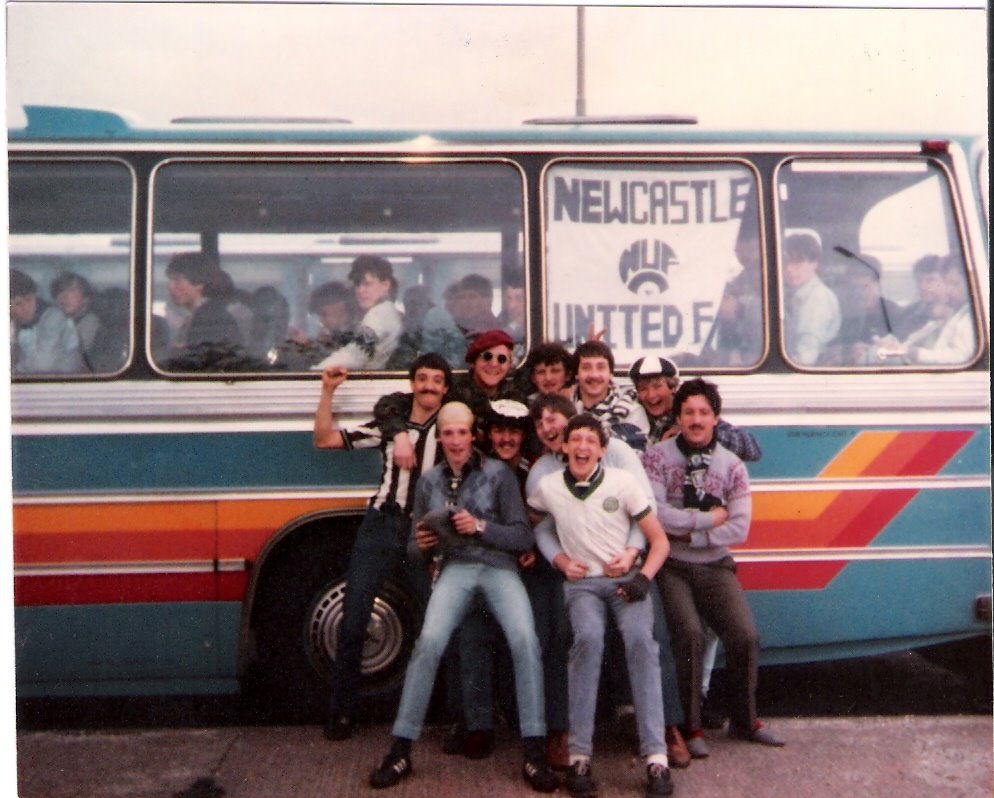

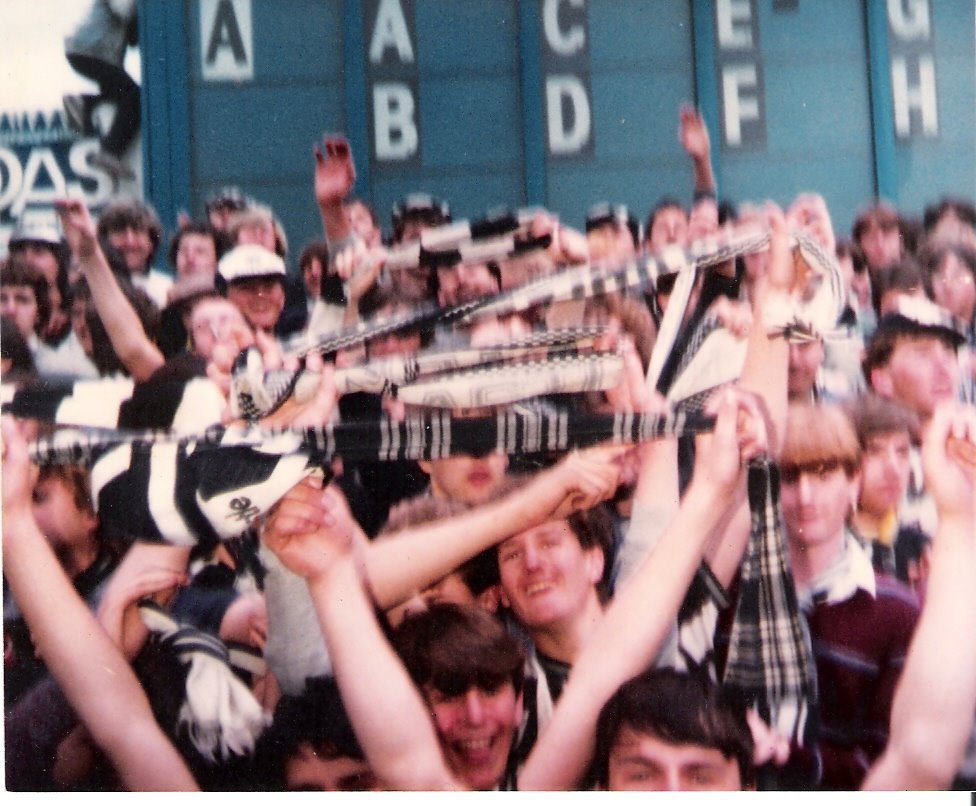
As I’ve mentioned this particular period conjures up some great memories. I travelled to away matches with the Newcastle United Supporters Club on the Armstrong Galley coaches. Bookings for away travel were taking at the club shop in the Haymarket, where you purchased your travel tickets and also got your membership book stamped, so you could show off how many away matches you’d attended. The “Sarnie Squad” always used to travel on the same bus together with John Moody (who took these photographs) as our coach steward. 


During that promotion season I travelled to almost every away match, even back in those days I was an avid football ground bagger, making sure I went to the grounds I hadn’t been to that season, as I was positive that we were on our way up and hoping we wouldn’t be returning to these Second Division backwaters again.
The promotion party was expected to take place nine days before the last away game at Huddersfield, when we took over the tiny Abbey Stadium in Cambridge. The required victory was a formality when you consider our hosts were without a solitary win in 31 games. However in typical Newcastle United tradition we blew it, going down to a shock 1-0 defeat, which still ranks as the greatest day in their 35 year Football league history.
The players made up for that disappointing afternoon in the Fens with a dazzling display the following Saturday, thrashing Derby County 4-0 which virtually guaranteed promotion, as we lead fourth place Grimsby Town by six-points with two games remaining, plus we had the advantage of a 15 goal swing in our favour.


And so to make it all official (i.e. when our name is coloured in different from the others in the league table on final score) we just needed a point at Leeds Road. United went into the game without our talisman Keegan for the one and only time that season, but what difference would it make? Keegan was retiring so we had to get used to not having him in the side, plus it was only Huddersfield Town, we’ll piss this especially with a large fanatical backing which would virtually make it like a home game.
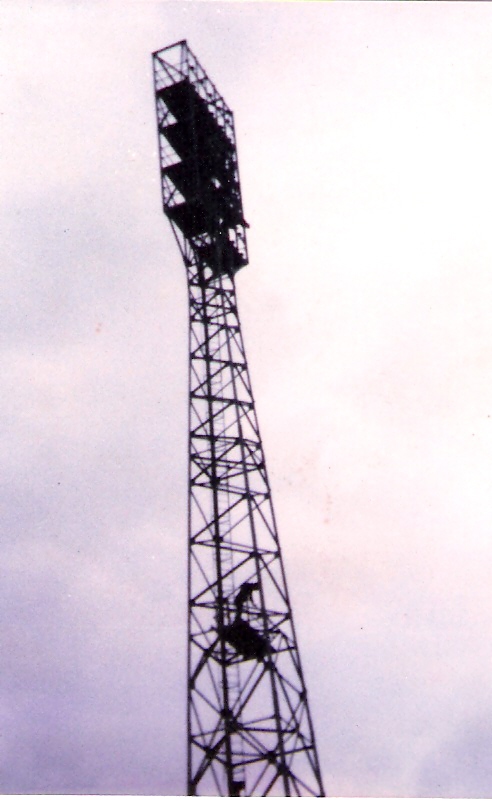
Prior to kick off trouble flared in the cow shed paddock, the terrace shared between both home and away supporters. Running battles took place with the police struggling to cope until the aggro died down as just as kick off approached. There were Geordies here, Geordies there, Geordies every *cough* where, as the Toon Army ranks were gathered in different pockets of the ground with a few climbing the floodlight pylons to get the best possible view.


As for the match itself, The Terriers started the game in a positive manner against a United side which looked disjointed and nervous in the first quarter of an hour. In the 22nd minute the Yorkshiremen took the lead, when a free kick from Brian Laws was flicked on by Jones and Cooper was on hand to smash home from six yards.
Four minutes later Town doubled their lead when a long ball from Wilson got caught in the wind and in true comical United style the ball glanced off the back of Steve Carney’s head over the hapless Kevin Carr. The script wasn’t going according to plan and as the ball hit the net a thought crossed my mind which was echoed by a fellow Toon fan standing next to me on the terrace; "We're shite without Keegan, we're a one man team"
Any negative doubts I had were soon diminished by half time by Keegan’s “Heir Apparent” Peter Beardsley who produced two pieces of magic in a frantic five minute spell just before half time. Wearing the United legend’s coveted number 7 shirt in his absence, he halved the deficit on 41 minutes. A cross by McDermott found David Mills just inside the area, who laying the ball into the path of Pedro who unleashed a vicious 20 yard drive which rifled into the roof of the net for his 19th goal of the season.
Two minutes later John Anderson had a goal disallowed for offside, and then on the stroke of half time United were level. Beardsley returned the earlier favour by flicking the ball into the penalty area for Mills to score his fifth goal in only ten full appearances during this campaign.
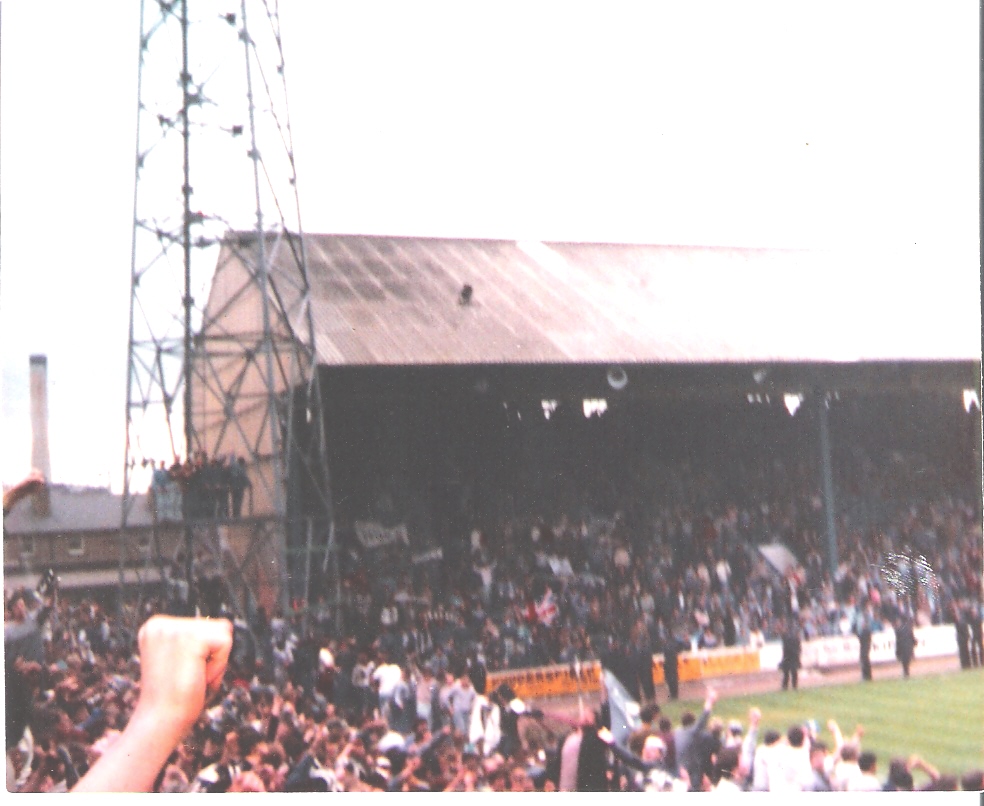
United failed to capitalise on their supremacy in the second half as Beardsley continued to torment the Terriers defence, but it didn’t matter, we had done enough and it was now official - Newcastle United were back in the First Division after a six year absence.


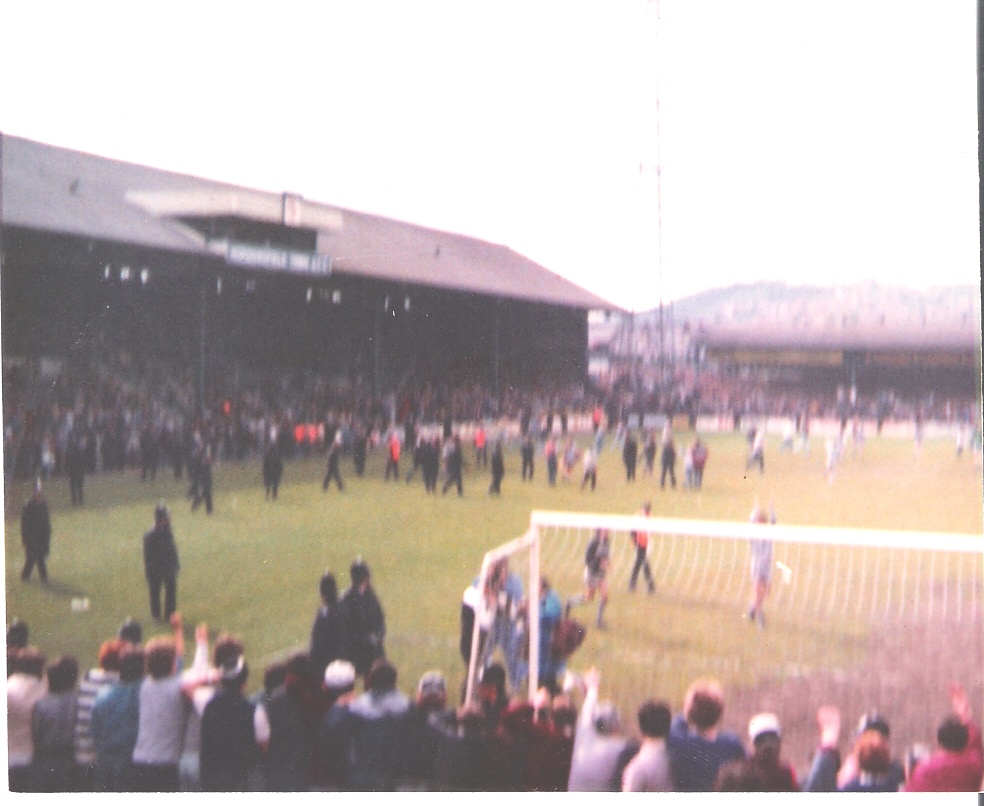
The final whistle was greeted with a mass invasion of the Leeds Road pitch from the Geordie hordes, as Arthur Cox and the players were chaired off the pitch by the supporters. We stayed behind as the players finally remerged to do a lap of honour with Kenny Wharton holding the “Pride of Blakelaw” banner which had first made its appearance at St James Park 48 hours earlier.


A fabulous finish to one of my favourite seasons, this matchday being one of many highlights which including great away wins at Leeds, Man City, Charlton and the best of the lot being the 4-1 win at Portsmouth. These matches were all attended on the Armstrong Galley buses with the Supporters Club, an organisation which is still sadly missed, nevertheless the spirit of the “Sarnie Squad” will always live on. 
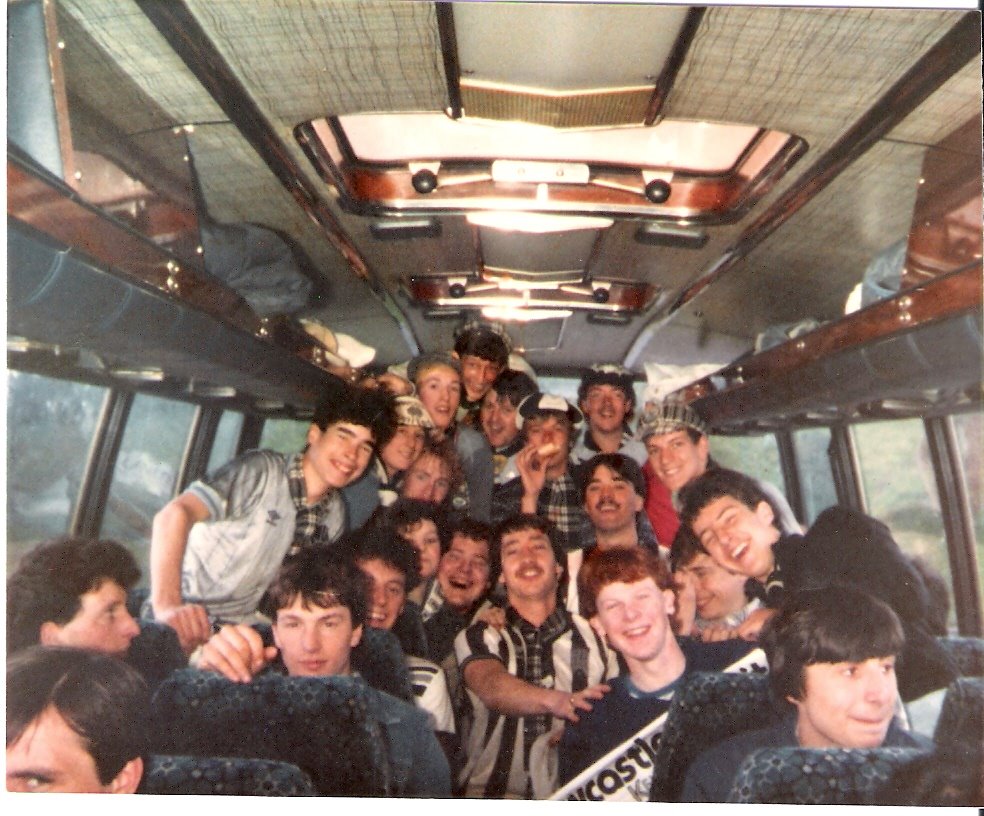


This updated version titled 'The Sarnie Squad' from the post originally written in September 2006 was published for Issue 8 of Toon Talk Magazine.

Editor Steve Wraith describes the magazine as;
The young upstart of Newcastle United fanzines. Its the new kid on the estate who spray paints his tag on your corner shop wall...the new boy next door who sits on your wall and hockles on your driveway...the new lad who drinks your special brew and snogs your lass.


More details on Toon Talk and where to purchase the magazine can be found on the website;
http://fansonline.net/newcastleunited/index.php

Saturday, January 8, 2011

My Matchday - 272 Broadhall Way

Stevenage 3v1 Newcastle United
FA Cup 3rd Round
Saturday 8th January 2011

The FA Cup 3rd round draw worked out nicely for a second successive season, pairing Newcastle with Stevenage, another Football League ground I’ve still to visit.
I had planned to travel to Broadhall Way in February, but delayed booking trains by a week as I had a sneaky feeling that the velvet ball bag would again pair both clubs in a repeat of the infamous fourth round tie in 1998.


Stevenage is a town and borough in Hertfordshire, which was designated as the first new town on 1st August 1946, as part of the Abercrombie Plan after the War to establish a ring of new towns around London.

Stevenage Borough Football Club originally formed in 1976 following the bankruptcy and resignation from the Southern League of the town's former club Stevenage Athletic.
In 1980 Borough joined the United Counties League, winning the Division One title and League Cup in the club's first year. They joined the Isthmian League in 1984-85 and three promotions in four seasons in the early 1990s saw the club’s promotion to the Conference League in 1994.
After winning the league in 1995-96, they were denied promotion to the Football League due to ground criteria. The club missed out in the play-offs in 2005 before finally gaining promotion to the Football League last season. The club made their debut in the 92 with a new title, after dropping the 'Borough' suffix from their name.
Stevenage have also gained success in the FA Trophy, becoming the first team to win a competitive final at the new Wembley in 2007, beating Kidderminster 3–2 in front of a competition record crowd of 53,262, then again two years later beating York City 2-0.

Broadhall Way was originally home to Stevenage Town from 1961, until the club went out of business and the ground instantly taking over by Stevenage Athletic in 1968.The ground was originally farmland with the first stand built in 1964, a 450 seated structure which stood for 30 years.
After Athletics’ demise in 1976 the ground remaining empty for two years. The pitch was ripped up and the stands partly derelict until the local council re-purchased the ground in 1978, allowing Borough to move in, re-laying the pitch and renovating the existing stands.
Following Stevenage's successful title campaign in the nineties, when promotion was denied to the League due to insufficient ground capacity and facilities, the Hertfordshire club have spent the new millennium upgraded the ground to the sufficient standard in readiness to host League football.


The Main Stand is all-seated and covered, a single tier which runs pitch length with a few glass-fronted club offices and executive boxes at the rear.
Opposite is the covered East Terrace, which again runs pitch length, its main feature is a central gable which has a clock face next to the television gantry.
The North Terrace has cover running three-quarters, with an open section at the east side. The stand was opened in 2001 at a cost of £600,000, with a capacity of 700, which also has a disabled section.
The South Stand is a single tiered 1400 all seated covered stand, which was also opened in 2001 and is the away section. There is an electric scoreboard on the roof facia and similar to the main stand there is a section of white seats with Boro picked out in red.


A new set of floodlights were installed on the eve of the 2007-08 season, then in January 2009 the club signed a 7-figure sponsorship deal with the Lamex Food Group, renaming the ground The Lamex Stadium.
For some reason or another, I can’t quite recollect why, I wasn’t at the ‘98 cup tie. I do remember coming away from Goodison Park after a scrappy Ian Rush goal had booked our place in the next round, racing back to Ian’s car to catch the live 4th round draw.
Unfortunately we missed it, but all the talk on 5 Live was about Newcastle United being drawn away to Conference side Stevenage Borough, with the radio station commented on the game being switched, as it couldn’t be possible for little Broadhall Way to host such a tie.(I’m sure it was that dickwad Alan Green who was shouting the odds)
Freddie Shepherd agreed after a United party inspecting the ground, while manager Kenny Dalglish had a dig in his usual droll manner declaring "We'll play you anywhere, Hackney Marshes, anywhere" responding to jibes that the Toon were basically crapping themselves over the prospect of a potential giant killing.
The tension between both clubs built up the week prior to the match as The Sun newspaper backed Boro by sponsoring the team jerseys, giving away free plastic hats and slagging off NUFC, with negative stories every day in the run up to the game, so by kick off the hostility between both clubs had reached boiling point.
Stevenage hosted the tie after erecting a temporary stand behind the away end, which satisfied the FA, increasing the capacity to 8,100 which gave Borough their record attendance of 8,040.

I watched an uncomfortable ninety minutes at home on the sofa. The game ended all square(Dalglish blaming the bouncy ball) as Stevenage earned a trip to St James Park, before losing 2-1 in the replay, courtesy of an Alan Shearer double (one of which I admit, was a dodgy decision)
Thirteen years later and we meet again, however this time it’s a meeting of two very different clubs. Gone from Newcastle is the motor mouth chairman (now we have one that says nowt!) aloof manager and the multi-million pound squad, while Stevenage are quickly establishing themselves as a League club with a little ground to be proud of.

Just as I had a hunch that United would be drawn against Stevenage, I also had a horrible feeling that the home side would be victorious in this 3rd round tie.
The day started well, a smooth journey down the A1 with the Patrick’s (squad#2&79) with the car being filled with Graham(Squad#88)with his son Hayden, who we picked up en route.
After a brief exchange of words with Kevin Keegan, I enjoyed a 40 minute interview with the BBC outside the ground’s main reception. The interview was part of a new series on Radio 4 called 'The Completists' which is about obsessive collectors. The series features the likes of hoarders of scooters, train timetables, Peter Pan books and of course, some sad sack who collects football grounds. The interview was done by Ian Marchant with multiple Sony award winning radio producer Peter Everett. (Details of the programme will appear on the blog when it’s broadcast)


My anxiety about the Toon falling prey to a cup giant killing was confirmed earlier in the day, when I heard a very confident Boro manager Graham Westley talk up his teams chances of causing an upset on Talksport.
He had every right to be so buoyant, as his team outfought, outwitted and outclassed a lethargic United side, who badly let down the travelling supporters in the South Stand.
After a tepid first half, Boro took a deserved lead with a two goal burst early in the second half. Stacy Long's strike took a wicked deflection off the head of Mike Williamson before Michael Bostwick struck from the edge of the box via the post.
A miserable day for the Toon was complete when substitute Cheik Tiote saw red for a wild challenge before Joey Barton pulled one back from 30 yards in injury-time to half the deficit.
However it was false hope as Peter Winn restored the two goal cushion, the ex-Heed man slotting home to cap off a memorable day for the Hertfordshire club.
So after 13 years of Geordie hurt, Stevenage finally got their day of reckoning after the exploits of 1998. It’s said Revenge is a dish best served cold, well Boro got what they thoroughly deserved on a wintry January day - bitter revenge, which will haunt us Toon fans for many years to come.


Matchday stats
SFC 3(WilliamsonOG 50 Bostwick 55 Winn 90+3) NUFC 1(Barton 90+2)
att.6644
Admission £30(usually £18)
Programme £3


Tuesday, June 22, 2010

My Back Pages - 91 Giuseppe Meazza Stadium

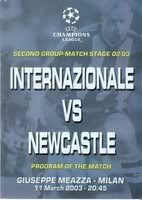
Internazionale 2v2 Newcastle United
UEFA Champions League Phase Two
Group A
Tuesday 11th March 2003
The euphoria and overall feel good factor amongst the Toon Army after easily winning the second division turned to a desolate mood, when the club issued a statement one week after the final game of the season.
The statement detailed that Chris Hughton will have no money to spent this summer, any influx of players will be financed by raising funds by selling, making use of the loan system and developing younger players through the club‘s Academy.
Lee Ryder from the Evening Chronicle wrote a interesting piece on the subject titled ‘Newcastle may not be a Pompey but the
San Siro seems a million miles away now highlighting where it’s all gone wrong since that night in northern Italy in March 2003.
So for the latest in the My Back Pages series I thought I would travel a million miles away to the San Siro when United faced Inter in the second phase of the UEFA Champions League.

San Siro is the district in the western part of Milan where the "Nuovo Stadio Calcistico San Siro" was constructed in 1925, renamed the Stadio Giuseppe Meazza" in 1980 in honour of the legendary Italian striker who was born in the city and served both Milan clubs.
The first match took place on 19th September 1926, a crowd of 35,000 saw Internazionale defeat home side AC Milan 6-3, it wasn’t until 1947 that Inter became joint tenants, both sharing the stadium ever since.
In 1955 the capacity reached six figures with completion of two further tiers, the international between Italy and Brazil the following April drew a crowd of 100,000 who witnessed a 3-0 win for the Italians.
After the Heysel Stadium disaster in 1985 the stadium’s capacity was reduced to 80,000, before undergoing further redevelopment for Italia ’90 with $60 million spent on bringing the stadium to UEFA 5-star standard.
The revamp included the stadium becoming all seated with an 85,700 capacity with extra tiers added to three sides. Eleven 50 metre high concrete towers were built around the stadium perimeter, the four located in each corner used to support a new roof which has distinctive protruding red girders.
Inside the stadium looks mighty impressive, seating at each side is decked out in different colours, blue and green behind the goals with a mix of red and orange at the sides.
The pitch views are first class with each section of seats having TV screens within the stand.

We flew across to Milan from Stansted, departing our homes in the middle of the night to catch our mid-morning flight, which arrived in Italy around lunch time.
Milan is the capital of the region of Lombardy and of the province of Milan, founded under the name of Mediolanum by the Insubres.
The city became successful under the Roman Empire after its capture in 222 BC. It was later ruled by the Visconti and Sforza dynasties, the Spanish and the Austrians.
In 1796 the city was conquered by Napoleon and during the Romantic Period became a major cultural centre, attracting artists, composers and notable literal figures.
Milan is now recognised as a major global city, a centre of fashion and design, with fashion houses in the ‘Montenapo’ and Galleria Vittorio Emanuele, with a rich cultural heritage and vibrant nightlife it became a home from home for the 12,000 travelling Geordies in familiar glamorous surroundings for this big Champions League clash.
A friend of Ian’s booked us into a quite posh hotel in the outskirts of the city. Our definition of ‘posh’ being a hotel where you each get your own dressing gown with matching slippers and the bathroom has a separate bowl to wash your feet in. (That’ll be a bidet…Eddy) The hotel staff made us feel quite welcome and wished us the best of luck as they all favoured the Milanese club which wears the red and black stripes.We spent the matchday mainly sight seeing as there was a 24 hour alcoholic ban, just as there had been when we visited Juventus earlier in the season. However we did manage the odd drink in many of the city’s cafĂ© bars, until we were spotted by fellow thirsty Geordies which each time resulted in the proprietor chucking us all out.
I decided our best chance of getting a pre match bevvy was to catch the metro towards the San Siro, but alight three stops beforehand so we were out of the city centre and not too close to the stadium. The plan worked a treat as we found a bar a short walk from the station, where a few Newcastle supporters were enjoying a peaceful drink on the patio terrace.
It was here where we spotted a familiar face strolling along the sidewalk with a young bird on his arm. “Ricki Lad” “Whey-hey Rick” we shouted at former Yes man and prog-rock keyboardist
Rick Wakeman,who stopped for a chat and seemed a genuinely canny lad.
By the time we caught the metro to the stadium, Ian was as drunk as a fiddlers bitch and I lost both him and Lee in the melee during the long walk to the ground. When we met up again at half time I learned he had no match tickets, Ian had either lost them or had his pocket picked.
With Lee in tears outside the ground and kick-off time approaching, in an act of desperation they pushed their way through the gate in amongst the sway of Toon supporters, successfully
managing to get through without getting nabbed, so they were both very lucky they didn't suffer a matchless Milan trip.
Newcastle United’s second adventure into the worlds top club competition looked a brief one, three straight defeats to Dynamo Kiev, Feyenoord and Juventus left United on the brink of elimination, but miraculously United grabbed second spot winning the reverse fixtures, culminating in an unforgettable night in Rotterdam.
The second phase again saw the Geordies make a poor start. A heavy home defeat to Inter was followed by defeat in the Nou Camp, however a win double over Bayer Leverkusen meant United could still progress as long as we could simply achieve a positive result in Milan.
The pre-match atmosphere was electric, while the travelling Toon Army were in fine voice and in buoyant mood, our Milanese hosts were less than genial. Racial abuse towards United players, stones, coins, bottles of piss and flares thrown into the away section, one of which landed close to my feet. I was lucky I wasn’t burned, but at least I had the consolation of appearing on TV as the camera focused on the incident during the live broadcast.
The local constabulary did nothing about this, apart from put on their helmets in case they got hit by a wayward One Euro coin and observe proceedings as if this was the normal ritual amongst the locals, getting showered with urine or set on fire not too serious an offence.
The match itself will live long in the memory, the Magpies pegged back by Inter after talisman Alan Shearer had twice giving United the lead.
The opening goal came just before half time. Solano played in Bellamy on the right, his ball across the face of goal was turned in by Shearer from close range. The interval was one of the most memorable in my time supporting Newcastle. 1-0 up in the San Siro, unbelievable, we just wished it was full time and we didn’t have to play another 45 minutes.
Soon after the restart the cheating, whingeing, racist thug Vieri equalised (can you tell I don’t like him) getting in between O’Brien and Speed to glance in a header from a Conceicao cross.
United regained the lead three minutes later. Tolds failed to keep hold of a Robert cross allowing Shearer to take full advantage, but again United failed to hold on to their slender lead, on the hour mark an Emre free kick from the left was met by Cordoba with a powerful header.
Newcastle pushed for a winner but in true Italian style Inter seemed content on sitting on the point. We walked away from the San Siro after the final whistle disappointed in only getting a draw. Bobby Robson, the players and fans felt we deserved to win, which showed just how far we had progressed in the competition over the season.
The point wasn’t enough, a home win over Barcelona coupled with an unlikely defeat for Inter by Leverkusen in Matchday 6 was required for United to qualify for the knock out stages, and as it turned out both results went by the form book.

The change in fortunes and difference in scale of both clubs can be summed up as Newcastle are the current Championship winners and Inter the holders of the UEFA Champions League, not quite a million miles apart but still one helluva distance.
The two days in Milan was one of my most enjoyable trips supporting NUFC. This despite of the flare incident, the Patrick’s losing their tickets and having to tolerate a set of grade one partisan fans which makes a Toon trip to the Stadium of Light seem like a day trip to Whitley Bay.
This match and occasion goes into the ‘I was there’ category. I wouldn’t have missed this one for the world and would have happily travelled a million miles just to be there.


Matchday stats
FCIM 2(Vieri 46 Cordoba 60) NUFC 2(Shearer 42,49)
att. 53,459 (liars! never 32,000 empty seats, estimate around 72,000)
Admission £25


Saturday, February 13, 2010

My Matchday - 242 Liberty Stadium

Swansea City 1v1 Newcastle United
Championship
Saturday 13th February 2010

Swansea is a city on the south-west coast of Wales in West Glamorgan on the banks of the River Tawe, known locally as Abertawe - “mouth of the Tawe”
Swansea geographical location saw it thrive during the industrial revolution, the port exported coal across to the south-west of England and specialised in copper smelting, as smelting works opened along the Tawe Valley.
The town expanded during the 18th and 19th centuries as the Smelters were established producing arsenic, tin and zinc to create tinplate and pottery, which made the town a big player in the world copper industry, which termed Swansea the name “Copperopolis".
Swansea Town formed in 1912 and joined the Southern League Second Division, winning promotion prior to the war which gained admission into the expansion of the Football League, becoming founder members of Division Three South.
Swansea gained city status in 1969 to mark the enthronement of Prince Charles as the Prince of Wales, so the club became Swansea City in February the following year.


Having played at the Vetch Field for 93 years, Swansea City moved into a new purpose built stadium on the outskirts of the town on the west side of the River Tawe.
The stadium was built upon the site of the former Morfa Athletics Stadium and during construction went under the working name of White Rock, named of the copper works which was located on the site and opened way back in 1737.
White Rock would have been a unique and cool name for a football ground, however the stadium became available for sponsorship naming rights, which went to local developers Liberty Property, so it became “Stadiwm Liberty” on 18th October 2005.
The stadium was designed by Gateshead based TTH Architects (I’m their postman. Morning!)and built by Interserve at a total cost of £27m.
It wasn’t just the Vetch Field that needed replacing, local rugby club All Whites played at the St. Helen’s ground which was also well past its sell by date.
All Whites merged with Neath RFC to form Ospreys, and along with Swansea City the city council had the ideal site in Landore a few miles from the city centre to accommodate both clubs.
The 20,500 capacity multi-use stadium was funded by the nearby retail park built on the east side of the river. Work commenced in Autumn 2003 with the opening game played on 23rd July 2005 between Swansea and Fulham.
The stadium has four two tier stands all equal in size with a much larger top tier. The West Stand is slightly bigger having executive boxes at the back running full length of the stand. The seats are decked out in black with triangular shapes and the name of the ground and home teams picked out in white.
The stadium benefits from partial transparent roofing which produces more natural light and has electric scoreboards on top of the North and South Stands.


Outside the stadium in the south-west corner stands a statue of Ivor Allchurch MBE.
“Swansea’s Golden Boy’ wasn’t just a legend for The Jacks but was also a great favourite on Tyneside. Ivor signed for Swansea Town in 1947 scoring 124 goals in 327 appearances before a big money move to Newcastle United in 1958. In four seasons Ivor notched 51 goals in 154 starts before returning to South Wales to Cardiff City before going back home to Swansea in 1965.
Allchurch scored a club record 160 goals for Swansea and with 68 Welsh caps once held the record appearances for his country. Ivor was a true gentleman on the field and never the type of player to lose his temper, a gifted inside forward who could play with both feet and was renouned for his pinpoint passing and his ability to score from distance. A true football legend and the golden boy of Swansea and Wales.


With an unbeaten league run of 15 games coming to an abrupt end at Pride Park last Tuesday, this game took on a much greater significance for Newcastle. It was expected that the players would show a positive reaction to the gubbing off Derby County with a good performance and result at the Liberty Stadium.
Well at least the result was a good one, as the overall performance was very poor and the Toon were lucky and rather fortunate to share the points with an energetic and well organised Swansea City side.
City looked up for the game from the start, applying early pressure and going close with a well worked free kick from Orlandi. United’s best effort came after half an hour when Nolan should have done better with a close range header, but overall the Jacks were the better side and at the break I personally would have settled for a point.
In the second half the Swans went close with two efforts from Dyer but eventually took the lead on 56 minutes. A Pratley cross was dummied by Dyer which allowed Cotterill plenty of space and time to cut inside and pick his spot giving Harper no chance.
Williams then went close with a header but the best chance fell to Pintado who could have secured the points, missing his kick from close range with only six minutes remaining.
Three minutes later Newcastle levelled. Substitute Leon Best produced a great cross which was met at the back post by Andy Carroll with a powerful header. A goal which left me and the rest of the Toon Army both stunned and yet relieved to be able to make the long journey home with a point, which wasn’t deserved, but may prove to be a crucial one by the end of the season.

Following on from Cardiff and Plymouth this is the final part of my far flung Championship grounds trilogy. The final episode saw the earliest departure time yet - 3.30am, as Sky Sports decided to broadcast the game with a 12.45 k.o. to go up against ITV’s coverage of the FA Cup.
With the game kicking off early I thought I wouldn’t have much precious time in Swansea, to do the things I needed to while visiting this corner of South Wales.
I needn’t have worried as we arrived in good time at around 9.30am, giving me plenty of time to tick off a couple of pubs (your reader should know which ones..Eddy) and pay homage to the Vetch Field.
As is always the case when following NUFC away, I was with Ian Patrick and his son Lee, Ian doing his usual fantastic performance behind the wheel, even though he nearly dropped off a couple of times, myself and Lee took turns at going shotgun to keep him awake during the 700 mile round trip.
I decided we should stay well away from the M4 with the Rugby Union international in Cardiff between Wales and Scotland taking play at 2pm. So I navigated an alternative route, crossing the border at Monmouth and travelling on the A40 towards Abergavenny and through the valley’s down the A465 towards Merthyr then out at the bottom across the M4 into Swansea.
This was a much better and quicker way to South Wales, the roads were quiet and I didn’t see any other football fans on route, meaning we made good time heading back north, arriving home at quarter to nine.
We found the Swansea folk very friendly making our short stay in the city very enjoyable. I’m pleased to complete this ground trilogy and special thanks to 100FgC #2 for making the three match days enjoyable and getting us safely from A to B and back again, even though it meant getting up in the middle of the night and having to suffer sleep depravation, although overall it's been well worth it and a small sacrifice to pay to tick off these new grounds.

Matchday stats SCFC 1(Cotterill 56) NUFC 1(Carroll 87) att.15,188 Admission £30 Programme £3

Ground no.242 Liberty Stadium - Matchday Web album (22 pictures including 9 from the Vetch)

Saturday, January 2, 2010

My Matchday - 239 Home Park

Plymouth Argyle 0v0 Newcastle United
FA Cup 3rd Round
Saturday 2nd January 2010


Plymouth is a city in Devon in the South-West of England, between the mouths of the rivers Plym and Tamar which flow into the natural harbour of Plymouth Sound.
Plymouth is renowned for its sea port. The Pilgrim Fathers set off for the New World in 1620 and established Plymouth Colony, the second English settlement in America.
The port thrived during the Industrial Revolution, building Royal Navy ships and importing goods and passengers to the States.
Famous Plymothians include nautical traders Sir John Hawkins and of course Sir Francis Drake. According to legend Drake insisted on finishing his game of bowls on the Hoe before going into battle with the Spanish Armada, in a similar way that I insist on finishing my pint before going to the match!
The city now has a population of a quarter of a million, which makes it the biggest city in the country to have never played host to the top flight of English football.


Home Park was originally home to rugby, where local clubs Plymouth Albion and later Devonport played during the 1890‘s. The latter club departed due to a rent dispute which left the ground vacant for three years.
In 1901 the lease was taking over by the long established Argyle Athletics Club, the ground at the time being an oval shaped bowl with a cinder track and the surrounding land made up of farmland and allotments. The ground had two structures, a main stand and a open corner west terrace on the Popular Side.
The new owners staged their first event, an athletics meeting in 1901, however leaseholder Clarence Spooner was keen to stage football as Devon lacked a senior football club. A series of successful trial matches followed which attracted healthy attendances and convinced Argyle A.C. to focus on professional football.
Plymouth Argyle FC made their competitive bow in the Southern League against Northampton Town on the 5th September 1903 in front of a crowd of 4,438.

.
The Main Stand was originally a wooden structure with a centrally positioned gable with a capacity of 2,000. In 1930, ten years after joining the Football League the stand was replaced with a new full length grandstand costing £11,000.
The close proximity to the Plymouth naval base caused damage to the ground during the Second World War, the pitch was badly covered with bomb craters and worse still the grandstand was destroyed by explosives and inflammable materials.
The stand was replaced with temporary uncovered seating and a wooden pavilion was built in the corner of the pitch for the directors, which is nowadays used as a PA box.
The current Main Stand was built in 1952 with floodlight switched on in October the following year for a friendly with Exeter City.
The Leitch inspired stand runs pitch length with a green con-iron roof and windshields, seating is provided with the classic old wooden flip chairs.
In 1969-70 seats were added at the back of the lower tier, known as the Mayflower Stand which took the seating capacity to 4,100 and at the time the overall capacity to 40,000.

.
Cover was first added to the Devonport End terrace in 1930 with funds generated from the supporters club and extended towards the Grandstand two years later. For safety reasons the roof was taking down in 1980 and replaced four years later, while the Lyndhurst Side terrace was covered in 1965
In 2001 work began on both these stands as well as the open Barn Park terrace and corners, which was completed in February the following year. The three sides form a horseshoe single tiered stand, decked out in dark green with a simple white trim behind each goal and PAFC along the Lyndhurst Stand.
The Field of Greens now has temporary seats which replaced the Main Stand terracing in 2007 which run up to a row of executive boxes. There is a small enclosure in the corner with floodlights now perched on top of the Lyndhurst Stand and thin pylon poles at each side of the Main Stand.

.
Home Park was recently announced as a host stadium for England's 2018/2022 World Cup bid. The stadium will be redeveloped from 19,500 into a 40,000 capacity stadium, which will see the current grandstand replaced at the end of next season.

A disappointing game to start off the new year, played on a bobbly cut up pitch with both sides lacking creativity and as I predicted after only 20 minutes; “This game’s got nowts each written all over it”
It was Newcastle who had the two best chances, both coming at the end of each half. A Guthrie shot bringing out a flying save from Romain Larrieu just before half time, then as Newcastle rallied for a late winner, a Nicky Butt half volley was tipped on to the crossbar, the Argyle keeper producing another fine save.
Plymouth made only the one change after their convincing win over Reading early in the week, while United made seven, amongst those were Ryan Taylor and Fabrice Pancrate who didn’t produce a decent cross between them all afternoon.
Both sides will be disappointed with the draw, especially The Pilgrims who will have to endure the long trip north for a midweek fixture in ten days time.


Everyone knows that the furthest point between two English football league clubs is the 408 miles between St. James Park and Home Park, so how is such long time consuming trip navigated?
From Home to Home Park
Planes? - We tried to book planes to Exeter, we were quoted £82 which sounded fine. I went online to book the flights, however they forgot to mention the T.P.T.- the taking the piss tax - which meant the total fair was £151, which is too much expense so close to Xmas.
Trains? Either going cross country or via London, the journey was too long and again too expensive and wasn’t worth it.
Luxury coach travel? - Yes, I was up for that, but Ian wasn’t. He didn’t like the idea of being stuck on a coach for that length of time with the added difficulty of trying to get comfortable and catch up on some much needed sleep.
So that left us with just one option - the car. Ian was keen to drive us there after travelling by road to the likes of Portsmouth and Southampton. On one occasion he drove us to Exeter and back in one day for an evening kick off and that was just for a bliddy friendly!
So taking inspiration from the
Aviva advert starring Paul Whitehouse(Green Arrrmee! …Eddy) it was Plymouth away today - “And that’s a long old poke init!”
I was looking forward to visiting Home Park but obviously apprehensive about the journey, but the trip went smoothly. I text radio station
TalkSport and at 8.20am Mark Saggers and my old mucker Micky Quinn sounded quite impressed as they discussed how Shaunee Boy, Ian and Lee had departed at 3.50am on route by car to Plymouth.
After a couple of pitstops we were eventually greeted by bright sunshine with just a touch of ground frost as we pulled into the Home Park car park at 10.15am.
I took a look around the outside of the stadium and visited the club shop before gaining access inside the Main Stand for pictures, thanks to a helpful gentleman from the club.
Ian took the opportunity to catch up with his sleep, leaving myself and Lee to go on a Wetherspoons pub crawl, visiting three of the four pubs, the only one we didn’t visit was the pub nearest the ground - The Britannia, which was packed out with thirsty Geordies with the queue outside stretching back down the street.
The trek home didn’t get off to a good start as we struggled to get out of the car park. In our part of the world drivers are mostly polite and considerate to one another but in the far south it seems to be an “all for one and bugger the rest” attitude.
We encountered some heavy snow showers as we travelled through Derbyshire, but apart from that we had been very lucky with the weather, meaning I arrived safely home just after midnight.
As far as ticking off ‘The 92’ is concerned, my geographical location means this is the mightiest tick of them all and thanks to my life long travel companion Ian, it was achieved with relative ease. Plymouth supporters view the long journey very differently to us, we did it in just over six hours, so to us it’s not so much of a long old poke, more like a nice little day trip out to the coast.

Matchday stats
PAFC 0 NUFC 0
att.16,451
Admission £24

Tuesday, November 24, 2009

My Matchday - 234 Deepdale

Preston North End 0v1 Newcastle United
Championship
Monday 23rd November 2009

Preston is a city in Lancashire on the north bank of the River Ribble, becoming England’s 50th city when granted city status in The Queen’s Golden Jubilee year in 2002 .
Preston was established by the Saxons, the name deriving from Old English; Presta and Tun meaning “Priest settlement” and appears as “Prestune” in the Doomsday Book.
Preston developed during the Industrial Revolution became a large populated industrial area with the expansion of textile manufacturing, although the town has produced textiles as far back as the mid 13th century weaving locally produced wool.

Preston North End formed in 1863, becoming founder members of the Football League and the very first League champions and ‘double’ winners in 1888-89.
The club originally played on Moor Park from 1867 until moving across the road to Deepdale Farm in 1875. In its formative years it staged cricket, athletics and rugby, with association football being the last in 1879, but within two years it hosted only football. By the end of the century Deepdale had two stands with a press box on the west side with banking and fences constructed around the rest of the pitch.
The first major work came in January 1906, with the construction of The Grand Stand on the west side which proudly stood for ninety years. The stand had a distinctive barrel shaped roof with a line of thin white iron support poles. The upper seating was made up of wooden benches with an open terrace, it also housed the dressing rooms and club offices.
It’s replacement the 8,000 capacity Main Stand was constructed in 1996 at a cost of £4m. What makes Deepdale so unique are the faces of North End legends portrayed within the seats, this stand is named after Sir Tom Finney with his image seen at the south side of the stand.

The Fulwood End was originally a large Kop when extended and covered at a cost of £19,000 in 1921. It’s curved terrace met the stands to the west and east with the roof at the rear of the stand. The stand was rebuilt in 1998, named after a legend who is also renowned on another Kop - Bill Shankly. The 6,000 capacity has the former Preston and Liverpool legend’s image situated centrally amongst the steep bank of dark blue seats.

The Town End terrace was first covered in the 1930’s with a plain pitched roof and was reconstructed in 2001. The Alan Kelly Stand has the former North End ‘keeper’s centrally position and is identical in design to the Shankly Stand.

The Pavilion Stand was made up of two separate stands. The first pavilion was built in 1934, the £9,000 capital raised through a share issue, it also had new offices and stylish boardroom. The South Pavilion was completed two years later which made the appearance of one long stand.
The new look Deepdale was completed on the eve of this season, the pavilions replaced by the Invincibles Stand, named after the famous double winning side. The stand has a smaller tier with PNE FC picked out in white. The stand also has a section of seating at the front as a replacement for team dugouts. There’s DEEPDALE and PRESTON in blue neon light at each side of a wall clock, with hospitality suites at the top which aren’t completed and are likely to remain so until the club ever reach the Premier League.

The new look Deepdale is modelled on the Stadio Luigi Ferraris in Genoa, the tall floodlights in each corner forming a link between each equally proportioned stand.
Deepdale is the longest continuously used ground, 134 years and counting, the biggest attendance is 42,684 for a Division One clash with Arsenal in April 1938. Also within this time was eight years with an unpopular plastic pitch, which was laid in 1986 before being ripped up in 1994.
Newcastle leapfrogged West Brom to regain top spot in the Championship, thanks to a second half strike from top scorer Kevin Nolan.
An even and uneventful opening period sprung into life with the home side finishing the first half strongly. Parry went close with a close range header, then Chaplow capitalised on a mistake by Guthrie but his shot sailed over the crossbar.
Just before the break a good interchange of passes left Mellor with a clear effort on goal, but he managed to scuff his shot which Harper dealt with easily.
Chances were limited in the second half. Mellor again wasted a good opportunity on 67 minutes then substitute Ranger had United’s first decent effort of the game, his shot going narrowly wide of the post.
The crucial goal came on 74 minutes, Guthrie found Nolan in the box and with his back to goal, he managed to turn and shoot, his left foot effort finding the far corner of the net.
Preston substitute Eddie Nolan almost snatched an equaliser on 79 minutes, but his ferocious shot was well saved by Harper, then with time running out Guiterrez could have wrapped things up but wasted a golden chance by typically lacking composure.
Not the greatest performance by Newcastle, but in this league it’s the result which matters. I’ll happily settle for this kind of display for the remainder of the season if this ends in United finishing within the top two in the Championship table.

At long last, me and Ian have finally got to Deepdale. We’ve only waited 29 years. In October 1980 Newcastle were away to Preston in a midweek Division Two fixture. At the time we were both 15 and in our last year at school. We decided we were going to ‘knock off’ in the afternoon and get the Supporters Club coach to the match. In the end we didn’t make it, deciding to pay the extra few quid and go to Bristol City the following Saturday instead, keeping Preston for next season, but next season never came.
North End were relegated at the end of the 1980-81 season, then dropped like a stone through the divisions, within four years finding themselves in League Division Four.
We’ve willed them on in the play-offs, they’ve reaching the knock out stage of the season four times and lost in the final twice, so finally it’s taking Newcastle’s relegation to get us our much anticipated visit to Deepdale.
We - that’s myself with Ian(squad#2)Lee(squad#79) and Tom, headed off at 12.30pm. The reason we left so early is because I wanted to arrive before it got too dark. I had contacted the club last week, asking if it was possible to gain access into the ground to take some pictures for 100FGC.
I would like to thank Treve Whitford, he promptly replied to my emailed, letting me know I was welcome to come and take photographs inside Deepdale. Once we arrived we headed to the club offices and Treve was waiting to give us our very own guided tour. We walked around the perimeter of the pitch and I managed to get some quality photos of an empty (apart from the men from SKY) Deepdale stadium.
We then took the short drive to the Sumners pub, taking advantage of the car park, stopping for bait and liquid refreshment before heading back to the ground to visit the National Football Museum.
Never mind the football it’s worth visiting Preston just for the museum, there’s a large collection of football memorabilia dating back to the 19th century, including an England shirt from the very first international, the 1966 World Cup ball and the substitute Jules Rimet trophy (and yes, it was still gleaming) We spent a good hour looking around, if your yet to visit the museum it’s a must see and it’s even free admission.
And so we’ve successfully ‘ticked off’ Deepdale. The fixture we missed out on in 1980 saw a 3-2 victory for United, with a rare brace from Bobby Shinton and the unique treat of a goal by Billy Rafferty. That would have been well worth seeing but I wouldn’t have got a personal view of the ground, visited the museum and on top of that we saw a Toon away win anyway, which means after being delayed for almost 30 years, our visit to Deepdale was very much worth the long wait.


Matchday stats
PNE 0 NUFC 1(Nolan 74)
att.16,924
Admission £20
(more ground pictures including some inside the museum can be found on Facebook page)

Monday, September 14, 2009

My Matchday - 226 Cardiff City Stadium

Cardiff City 0v1 Newcastle United
Championship
Sunday 13th September 2009

Riverside Cricket Club formed in 1899, playing at Sophia Gardens on a ground roughly next to where Glamorgan Cricket Club now stands.
The club applied to become Cardiff City FC after the Welsh town was giving city status in 1905. Their request was initially rejected, but were eventually allowed to take the name in 1908 once they became a professional club.
Within two years the club moved to a new ground on the site of a former rubbish tip, naming the ground after a British member of parliament, who was killed during the First World War - Lord Ninian Crichton-Stuart.

After 99 years at Ninian Park, Cardiff City moved a short distance to their new purpose built 26,828 capacity - Stadiwn Dinas Caerdydd.
The stadium was built on the site of the former Cardiff Athletics Stadium by contractors Laing O’Rourke and forms part of the £100m Leckwith development.
The 60 acre project includes the 5,000 capacity Cardiff International Sports Stadium, which is used by Welsh League Two side Cardiff Bay Harlequins, as well as a retail park, new housing and hotel with bar and restaurant.
Cardiff City Stadium was designed by Arup Sport, constructed at a cost of £48m. Work commenced in early 2007 with the completion date set at December 2008, however the not so great British summer of 2007 caused a delay, so work was finally completed in May 2009.
The new stadium is very nice with all the facilities and comfort you’d expect from a spanking new stadium. However the one thing it lacks compared with the old ground over the road is the intimidating atmosphere, which was worth a goal head start when Ninian Park was jumping and filled to capacity.
The ground is identical on three sides, a single tier of shiny blue seats in the Ninian Stand, Grange Stand and Canton End. Away supporters are allocated the corner of the Grange Stand which also has a large video screen.
The Grandstand is different, having an extra shelved tier with a row of executive boxes behind and corporate hospitality suites in each corner.
There’s a large walkway which runs at the back of the stands which is used as a TV gantry. There’s plenty of scope to enlarge capacity if City ever reach the promised land and achieve Premier League status.
With all the backroom shenanigans and lack of cohesion behind the scenes it’s a surprise to report that Newcastle United have made a great start to 2009/10.
Prior to this game United had 13 points out of 15 including four clean sheets in a row ( Straights up! Check the stats) which earned caretaker gaffer Chris Houghton the Manager of the Month award for August.
The defence again held firm against Cardiff and old boy Michael Chopra, never looking in danger once they’d taking a 18th minute lead with a Fabricio Coloccini header.
The big hairy Argentinean probably had his finest game in a black and white..sorry! Solero coloured shirt. He started and ended the move laying the ball out wide to Ryan Taylor, his right wing cross was met with a towering header.
As well as a strong defensive display, Newcastle played some good passing football but lacked punch up front. Due to injuries problems, it was left to Nile ‘lone’ Ranger to lead the line himself, the youngster produced another impressive performance.
For City’s endeavour they never created any clear cut chances, efforts at goal were blocked by the Toon defence or comfortably collected by Harper.
City had a good penalty shout when Steven Taylor appeared to handle a Chopra shot and then in the last minute an opportunity to clinch a point. Alan Smith brought down Bothroyd on the edge of the penalty area, receiving a second yellow card and his marching orders. The resulting free kick by Chopra was fired into the Newcastle brick wall, assuring a professionals away performance and a fifth clean sheet on the bounce (Honest - take a look)
As is always the case when watching Newcastle away I travelled with Ian and Lee Patrick (100FGC squad nos. 2 & 79) Ian gave me the option of setting off at midnight or 4am, I told him that 5am would be ok, but Ian always has the impression that pending disaster awaits, so 4am it was.
A great driving performance by Ian, at total of 13 hours on the road, which is even more astonishing when you consider that when he picked me up, he announced that his attempt of an early night ended up as a sleepless night. So we could have easily ended up deserted in a ditch somewhere off the M6!
We arrived in Cardiff at 10am, taking advantage of free parking on Hadfield Road which is a short walk from the stadium and handy for junction 33 off the M4.
I wanted to take a proper look around Cardiff, so I left the lads and headed off alone into the city centre. On my stroll around the city I just happened to bump into three Wetherspoons pubs (which was nice!)

We arrived back home at 11pm and so that completes number one in a series of three, in our long Championship journeys of 2009/10 and I'm afraid to say that this trip into Europe is the shortest of the three.
Matchday Facts
Bluebirds 0 Magpies 1(Coloccini 18)
Att.25,630
Admission £26


Ground no.226 - Cardiff City Stadium - Matchday webalbum (20 pictures)

Wednesday, August 5, 2009

My Matchday - 219 Tannadice Park

Dundee United 1v1 Newcastle United
Pre-season friendly
Sunday 2nd August 2009

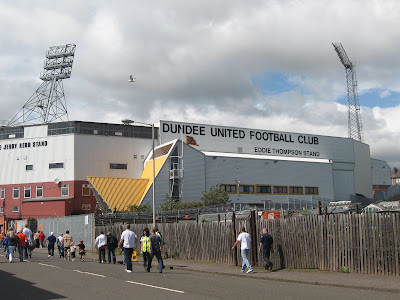
Dundee United mark their 100th anniversary this year. Part of the Tangerines birthday celebrations is a match against the once mighty Newcastle United, the second part of my Dundee double weekend.
Dundee Hibernian formed in 1909 by the city’s Irish catholic community, taking over the lease at Clepington Park, which at the time was held by current tenants Dundee Wanderers.
You could say that Dundee Wanderers weren’t too happy at being evicted by the ground’s landlord in favour of a more generous offer from the Hibs club. The angry former occupiers stripped the ground bare, taking down the grandstand, fences, changing rooms and the goalposts, leaving an empty field instead of a ready made football ground to play in.
The ground was then renamed Tannadice Park after the street where the ground’s main entrance is situated. £3,000 was spent on new facilities which included a pavilion with a 1200 seat stand.
A crowd of 7,000 witnessed the first match at the rebuilt and renamed ground, against their Hibernian counterparts from Edinburgh on 18th August 1909.
Major changes during the 1920’s saw the club renamed Dundee United after the club were saved from going out of business by a consortium of businessmen. The club then bought the ground for £2,500, raising finances through a share issue to make necessary ground improvements. Terraces were built, turnstiles and the Grandstand was enhanced, but the main renovation was to the pitch. Dynamite was needed to blast the solid rock under the surface to rid the steep slope and level the pitch.
It was 1957 before Tannadice saw any new major changes. The Shed end was built when a roof was erected over the West End and concreting at the opposite side on Arklay Street.
The record attendance was set in on 23rd February 1952 for a Scottish Cup tie against Aberdeen and floodlights were first switched on in November 1962 for a League fixture against Rangers.
The new main stand; The Jerry Kerr Stand was built in 1961 and took over a year to complete, the first in Scotland to have a cantilever roof and later in 1971, the first to have a glass fronted lounge for sponsors. The stand was extended in 1997, the newer part can be identified by the extended roof and the dark coloured seats.
The large terrace on the North side was first covered in 1979 and replaced in 1992. The stand is now named after former chairman George Fox. The stand has two tiers, a smaller tier of about half a dozen rows with a larger section below.
The Shed was installed with seats in 1994, there are still sections of the original terrace at either side. The Shed seats along with the rest of the stadium are decked out in tangerine which certainly gives Tannadice a vibrant vibe.
It’s a well known fact that the two senior Dundee clubs are the nearest neighbours in Britain and the second closest in Europe.(there’s two closer in Budapest) It’s not till you actually see it for yourself that you realise the proximity of the grounds, approximately 100 yards on either side of Tannadice Street.

When I booked trains and accommodation for this weekend back in early June, little did I know what a significant match this would become. The game was to mark the Tangerines 100th birthday, but the passing away of a true football legend this week overshadowed their special day, although I suppose that fact wouldn’t have been an inconvenience to the hosts.
I was glad to be at the first Newcastle United game since Sir Bobby Robson’s death. Around 2,500 Toon supporters travelled north just to be here, to sing the great man’s name and be part of a celebration of his life. The Dundee folk I spoke to over the weekend all mentioned Sir Bobby, saying how they liked him and relaying famous comedy quotes from his life.
The previous 24 hours I witnessed Dens Park honour his memory by holding a minutes silence, but the players and supporters decided that a minutes applause would be more fitting tribute. This was greatly acknowledged around Tannadice, with a rendition of “Robson Wonderland” ringing out from the Toon Army contingent.
With the current state of affairs at NUFC, the Bobby Robson era seem a lifetime ago. My everlasting memory of the Robson years is that I couldn’t wait for the next game to come around. I hated things like International breaks or blank Saturdays. Going to the match at the weekend was like it was when I was a kid, exciting and guaranteed entertainment, win lose or draw. I’ve never had that feeling since, over the last few years going to the match has been with a feeling of apathy, with last season’s campaign being one of dread.
Of course we didn’t win anything, but we came close and enjoyed matching ourselves against the cream of Europe. There was consecutive finishes of 4th, 3rd and 5th with the last of those positions looked upon as failure.
That just shows how the mighty have fallen. 5th top in the Premier League not good enough? At the moment I’d settle for 5th top in the Championship next season and a crack at the play-offs.

RIP Sir Bobby Robson - I thank you for giving us such treasured memories and making us smile.

This weekend was great. Bagged a couple of new grounds, cracking night out, canny drink, good crack and a laugh, then it gets spoilt by having to watch Newcastle United for 90 minutes!
It may be a new football season but nothing’s changed both on and off the pitch. With this being a match day I’ll comment on what I witnessed on the park, which wasn’t too pretty. The only pleasant sight being Newcastle’s new attractive looking new away strip, similar in style to Inter Milan, however the team were more Matalan than Milan.
The only positive was the team defended well, with youngster Tamas Kadar having a steady game at the back. However it’s in the last third where it all goes wrong, there’s not much of a threat going forward. During the game I made a few brief notes about some of our ‘star’ players; Gutierrez - ponytail on legs and not much else, Smith - A passenger with a nice haircut, Duff - unproductive loves running into cul-de-sacs, Barton - Thug Sunday pub player, Nolan - (got a)Big Fat arse!
There wasn’t much action during the first forty-five minutes. A Swanson shot was easily dealt with by Harper, likewise Banks had no problems gathering a weak header by Carroll.
The game improved as a spectacle in the second half. Newcastle took the lead on the hour when a Duff cross was parried by Banks, Carroll taking advantage with a good finish.
Five minutes later referee Chris Boyle awarded a penalty after a handball from Nolan. Swanson’s spot kick was brilliantly saved by Harper diving to his left, with the rebound going wide of the post.
Barton missed a good opportunity on 70 minutes, when running through on goal, Banks’ save fell to Carroll, who was unable to find the target which would have clinched the game.
Then on 84 minutes Dundee United were rewarded a second penalty when Ryan Taylor pulled back Ryan Conway by his shirt. This time David Goodwillie (sounds like a porn star...Eddy) made no mistake from the spot sending Harper the wrong way.
Overall a fair result, but both teams were unconvincing, especially the ‘stars’ in stripes who’s Championship campaign gets underway in less than a week, still manager less, clueless and with no sense of direction.

The morning after the night before, myself, Zippy and Mickey felt a bit rough, A couple of paracetamols, coffee and a bit fresh air did the trick, meaning we were ready for a pre-match drink before heading back up to Hilltown.
After a Sunday Club dinner at Wetherspoons and having to wait until 12.30pm for a drink (Scottish Law) we jumped a taxi to the Frews pub, which was a 5-10 minute walk from the stadium.
The Frews is a Dundee United bar which is adorned with Arabs memorabilia. There was also a wee shrine on the wall to Sir Bobby, with a Newcastle shirt and press cuttings from the last week.
The only problems we encountered over the weekend was what to do with our travel bags through Sunday afternoon. The Travelodge wouldn’t keep them and the Train station doesn’t have a luggage hold, this meant having to lump our bags around with us at the match. Luckily when the landlord of the Frews bar saw we had luggage, he kindly offered to let us leave them behind the bar when we went to the match.
The landlord looked familiar to me and Zippy. I thought he was an ex-footballer, he was strong in stature and had the respect of his customers. A big local laddy said the f-word a bit too loud and was abruptly told to button it, which he immediately did without argument.
After the game we went back for a drink and to collect our bags. As we said our farewells Zippy asked his breadknife who her husband played for, apparently he wasn’t who we thought he was, but she said we weren’t the first to mistake her hubby for an ex-fitballa.
We then hitched a taxi back to the train station, stopping off for one last drink before catching the 1819 back home. The trains again ran like clockwork, we arriving back on Tyneside at 2130.
As my reader may have gathered, I had a great weekend. I found Dundee a quite charming city with the Dundonian public very hospitable.
Apart from the big two clubs in the city there are seven Junior clubs knocking about close by, so maybe Dundee hasn’t seen the last of me, so a return to the former city of “jam, jude and journalism” may be a possibility sometime in the future.

Matchday facts
DUFC 1(Goodwillie 85p) NUFC 1(Carroll 60)
Att. 8876
Admission £12
Programme: sold out by 2.15pm (£2.50)